The clinic consists of a lab, a vital signs room (Ben Taub clinics take note!), a pedi and adult exam room, a dental clinic, and a room for the social worker and nutritionist. They keep the place impeccably clean. The actual hospital stays locked and dark all the time -- they only open it when surgeons visit to do mission work. They've got two ORs and a small recovery area.
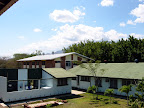
A 10 foot tall fence topped with concertina wire surrounds the compound with the clinic, the hospital, and our living quarters. An armed guard watches the gate around the clock. We live in a duplex on the grounds of the hospital with two rooms with two beds in each in each of the units. In addition to us and Jorge, three women live on the other side: Carolina, a psychologist; Alejandra, a nutritionist; and Claudia, a dentist. They're all from Guatemala and have been at the hosptalito for some time. Alejandra's English is the best, having learned it watching Dynasty and Dawson's Creek. In the evenings we all take our dinner (prepared on a small electric stove or my Foreman) on a little patio between the units and work on our Spanish and trade stories.
A typical clinic day runs thusly: Heidi and Hilda arrive around 7 and patients begin checking in. At 8 "Moon River" plays and the pharmacy and lab open. Don't ask -- I have absolutely no idea. During the day we can watch Hilda or Jorge seeing patients. Jorge was previously a director of medical education at a hospital and is an avid teacher of both medicine and Spanish. The medical problems we see range from mundane gripe (a cold) to pemphigus vulgarus (a condition where you’re basically allergic to your skin and develop terrible blisters all over your body). If anyone too sick comes in, for instance a baby with pneumonia, we send them to the larger hospital in Zacapa, about 20 km away.
Around 10 we break for a refaccion (a snack) served at the caseta in the compound. It's usually some tortillas with beans or cheese which I find tasty (damn the Brucella, full steam ahead). Lunch also happens at the caseta which is simple Guatemalan fare accompanied by a Pepsi.
A Brief Discourse On Soda: Many people know of the terrible civil war that gripped Guatemala for 30 some odd years between the military dictatorship (initially installed and later trained and armed by the US) and an array of generally leftist guerilla groups with the indigenous population in the middle losing over 200,000 people to the violence (almost all inflicted by government forces). This all ended in 1996 with the "Firm and Lasting Peace" which changed Guatemala from a seething mass of jungle crawling with death squads and militants, to one of the primo spots for eco-tourism in the world. Far fewer people know about the Cola War that followed. Thankfully, the only casualty of the pitched battle between The Coca-Cola Company and PepsiCo was the dental health of the people. In the past few years, it has become evident that Pepsi gained the upper hand and now only isolated enclaves of Coke exist to resist. The upshot for us: we drink Pepsi and 7-Up with our lunch. Oh, and all the police carry shotguns or assault rifles.
Lunch runs until 2 and then the last patient of the day gets seen around 4, when a little ditty plays over the speaker system. It seems that 10 to 15 patients represent a standard day. This leaves most of the afternoons free for adventures:

No comments:
Post a Comment